How long have you had migraine and what type of migraine do you have?
I’ve had episodic migraine for most of my life but it changed from an attack once-every-few-months-or-so to an average of three or more times a week in my mid-20s. This continued pretty much unabated into my 40s. I went through menopause a little early and had hoped this would mean they tapered off, but they marched on.
What medications, treatments or lifestyle changes have you tried to help manage your migraine disease?
I’ve tried almost every preventive medication available: amitriptyline, nortriptyline, fluoxetine, citalopram, venlafaxine, sodium valproate, topiramate, propranolol, timolol, metoprolol, verapamil, candesartan, sandomigran, melatonin. None of them made a significant or long-lasting difference and most of the drugs had unpleasant side effects. Amitriptyline, nortripyline and sandomigran made me so sedated I could barely work; I had nightmares and couldn’t walk up hills on the beta blockers; venlafaxine made me insomniac; topiramate made me stupid; valproate made me fat. Supplements: magnesium, vitamin B2, coenzyme Q10, omega 3, feverfew, butterbur (now not recommended due to the potential for liver toxicity). Chinese medicine and ayurvedic medicine. Botox. Acupuncture. Occipital nerve injection. Physiotherapy, chiropractic, osteopathy, massage therapy, craniosacral therapy, reiki, cognitive behavioural therapy, meditation. Cannabis. Diet restrictions: cutting out gluten, dairy, chocolate, alcohol, caffeine, citrus, nitrates, artificial sweeteners, foods high in tyramine, monosodium glutamate, nitrates, processed food, added sugar. Nothing worked. No matter what I did, I still had headache on around half the days in the month and other migraine symptoms on the rest of the month, particularly fatigue, nausea and brain fog.
Some things I’ve found helpful in perhaps reducing the severity of attacks or helping me recover more quickly. These include biofeedback (basically, teaching me how to breathe in a way that calms my body down), yoga, exercise, a strict bed time so I get enough sleep (especially important when you get menopausal related hot flushes and insomnia), and the Cefaly TENS (transcutaneous electrical nerve stimulation) machine. This can be applied to the forehead and buzzes the scalp with an eye-watering intensity, until you get used to it. It can be used preventatively but I find it most helpful to cope with protracted migraine attacks that last for days and don’t respond to any other pain relief. I’ve worn it at work and even at the movies, with surprisingly few quizzical looks. Quirky fashion can be fairly unremarkable in Wellington.
One thing I wondered for many years was how much my work environment impacts migraine. The frequency and intensity of my migraine attacks increased around the time I started working in an office. Interestingly, before this I’d been working in hospitals as a junior doctor, by a million miles the most stressful job I’d ever done. And yet under all that stress and sleep deprivation, I only had an occasional migraine attack. Was it the change in job type that brought on more frequent migraine attacks – exposure to computer screens, poor posture from sitting at a desk all day, a sedentary lifestyle, lack of exposure to sunlight?
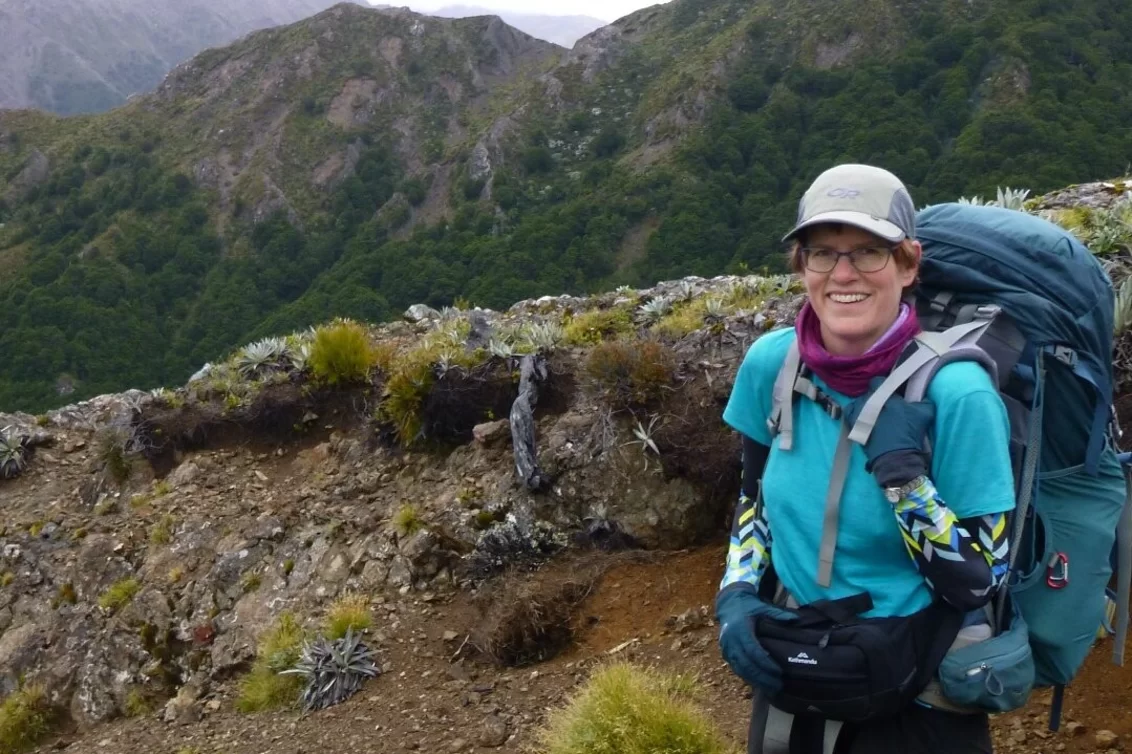
At the end of 2020, I took time out to investigate these questions, taking a break from work and spending five and a half months walking the length of Aotearoa/New Zealand, on the 3,000k Te Araroa trail (our national through-hike; literally the long pathway). Apart from the time I spent documenting the journey through an online blog, which I did via my smartphone, there were no computer screens; no deadlines, zoom calls or team meetings; plentiful sunshine, fresh air, and physical activity; and the biggest stresses of the day were planning where to stop for the night and what flavour of ice cream to eat, if we happened to pass by a shop.
It was an incredible experience but the migraine attacks did not miraculously disappear. I had good days and bad days, just like when I was at home. There was comfort in the routine and simplicity of walking the trail, where the superfluous is revealed and life reduces to the necessities of food, water, shelter and rest. But I still had migraine attacks, just as frequently but perhaps not as severe, although at least 2 lingered on for days, adding pain in the head to the other pains accrued from so much walking.
I learnt many things from Te Araroa, but in relation to migraine disease, it confirmed to me what I already suspected – there is no easy fix to this condition. If anyone tells me that this is the magic potion/device/diet/programme that will cure me, I take it with a hefty dose of skepticism.
However, I also learnt from Te Araroa that I am more capable and resilient than I previously believed. It was the hardest physical challenge I’ve ever undertaken, and equally a mental and emotional challenge. It gave me confidence in myself and faith in the future, that I can and will manage, even if the migraine attacks never retreat.
But after Te Araroa, I connected with two other women with migraine in Aotearoa (Sarah Cahill and Suzanne Vale) and we started the charity Migraine Foundation Aotearoa New Zealand. One of our goals was to advocate for the new migraine medications to become available and funded in NZ. I tried the first of these, Aimovig, then switched to Emgality (at around half the price), then to Aquipta, as taking a tablet every day was easier when I went on a six week tramping holiday in the South Island than trying to figure out how to transport a monthly injection that needed to be kept refrigerated. These were the first migraine preventive treatments that worked for me, with no side effects. I’ve gone from chronic migraine to now, in 2026, having 5 headache days in the last month, but only needing to take one triptan. Which shows the improvement – the attacks were so much milder that I could manage them with caffeine, a non-steroidal anti-inflammatory and some sleep. Previously, I was always weighing up when to take a triptan, shadowed by the ever-present fear of medication overuse headache, but always at the limit of 9-10 a month. These new medications have been life changing. They are not a cure and they haven’t worked 100% but they have suppressed the migraine dragon in my brain. Whenever I have tried to come off them, the attacks recur, reminding me of what life used to be like.
How does migraine disease impact your life?
Having migraine disease restricted my career ambitions – I had to choose jobs that allowed some degree of working flexibility and I limited the amount of time I worked to 0.9 at the most, preferably 0.8FTE. I would use the day off to catch up or recover. On the plus side, migraine effectively curbed my inherent tendency to be a workaholic and eliminated a habit of burning the candle at both ends, as the consequences were so nasty.
The down sides were substantial, however. I earned less than if I were migraine-free and I sacrificed other things to be able to work. So many days I gritted through a migraine at the office, not letting on to anyone how I feel, but depleting all my reserves so that when I get home I was a useless wreck, barely able to crawl into bed, let alone have a coherent conversation with my partner. I let hobbies and creative pursuits slip away, because I only had enough energy to attend to the basics – exercise, healthy eating, sleeping; trying to keep connections with my partner, family and friends.
The silver lining was being forced to prioritise the maintenance of my physical and mental health. If I don’t exercise or get enough sleep, or if I am overwrought by some drama, the ramifications are usually prompt. Other people may neglect themselves for years and only later discover that the damage done to their bodies, and minds, is deep and irreversible. I sometimes think of migraine as my health watchdog, that bites me when I stray too far from the path of well-being and zen. But often the dog goes rabid, and bites me when there is no need.
Obviously, if I didn’t have migraine, I would not have helped co-found Migraine Foundation Aotearoa NZ in 2022. This has been an enormous life change, involving reducing paid work to around one day a week, and devoting the rest of my time to the charity. So migraine has given me an even larger financial hit! But I wouldn’t have been able to do the amount of work I’ve done for the Foundation, paid or not, without the relief that has come from the new migraine medications.
What are your biggest migraine triggers?
Lack of sleep, emotional stress, alcohol, over-exertion. But not always and not inevitably. I think of triggers as pushing me over a threshold into a migraine attack – but some days, the threshold is high and it usually takes more than one adverse factor to reach it. I spent a lot of time trying to identify food triggers with unconvincing results. Now the migraine is much better controlled, I can see no relationship between any foods and my migraine attacks. Similarly, now, I can have a poor night’s sleep, go for a two-hour run or do a media interview (stress!) and not get a migraine attacks as a consequence. However, I avoid alcohol, processed food and excess sugar focus on a varied and balanced vegetarian diet. I eat dark chocolate almost every day.
How do you manage during a migraine attack?
My go-to pain relievers are non-steroidal anti-inflammatories and/or a triptan (I find rizatriptan to be very effective and less prone to causing a rebound headache than sumatriptan). I might also take a coffee, ginger tablets (or ginger beer or tea) and an anti-nausea tablet. Most of the time, this works. I put myself to bed early, if I can. Sometimes, the only solution is as much sleep as I can manage to get when it feels like a couple of knives are stuck in my skull.
How do you stay positive living with migraine disease?
My best coping strategies have traditionally been maladaptive, manifesting as some form of avoidance. I pretended I didn’t have migraine disease, I didn’t talk about it, I suppressed my emotions because they might trigger a migraine attack.
I’ve grown a little wiser over the years, and a little more forgiving of myself. I’ve lowered my expectations of what I can achieve, but with an attitude of permission and equanimity, not judgment and disappointment. I’ve cultivated gratitude for all the amazing things I have still been able to do, experience and share. I’ve come out of the migraine closet and sometimes spontaneously admit to having a migraine attack even when it is not evident. I’m also fortunate to have an incredibly supportive and sensitive partner, who is a rock when the waves hit. And I am so thankful that my migraine attacks are now nowhere near as bad as they used to be – and even then, not as bad as they could have been.
How can migraine care improve in New Zealand?
My own GP has been very supportive and willing to try new things, but I couldn’t avoid feeling that I was untreatable, when the drugs didn’t work for me, and that this was somehow my fault, and definitely entirely my problem, when the medical establishment ran out of options.
Having more general practitioners who take a special interest in the management of migraine disease and related pain issues could be helpful. It’s an unfortunate truth that pain loves company, and chronic migraine is not infrequently coupled with other diagnoses, such as fibromyalgia, irritable bowel syndrome, endometriosis, low back pain, bladder and pelvic pain. More research and understanding of the nature of pain and why migraine attacks occur is desperately needed. Fast-tracking the approval and funding of new migraine treatments would be a tremendous boon.
As people affected by migraine, we can also help support each other. We are all unique and what works for me might not work for you, but hearing from people who experience migraine not only makes you feel less alienated and alone but may bring to light some medicine or intervention that will knock back that pain in the head.
What advice do you have for other people in New Zealand living with migraine?
Keep trying and don’t lose hope. The most devastating thing a neurologist told me was that there was nothing he could do for me. This was not only untrue but it destroyed my hope that life could improve or even become bearable. Fortunately, I was able to quickly pull myself together and dismiss him as a loser, but it took decades before another neurologist, with a special interest in headache, not only validated my experience of chronic migraine but did offer hope, in the form of new treatments.
There is always hope and always positive actions that can be taken. Even when migraine becomes chronic, the pain can wax and wane and you can still be proud of achieving the task of getting through the day. Goals may shrink, but your value as a person does not. Don’t be afraid of changing doctors until you find one who is trustworthy and empathetic, and able to engage with you on what may be a lifelong journey in trying to manage migraine, including alternative therapies.
Updated 2026