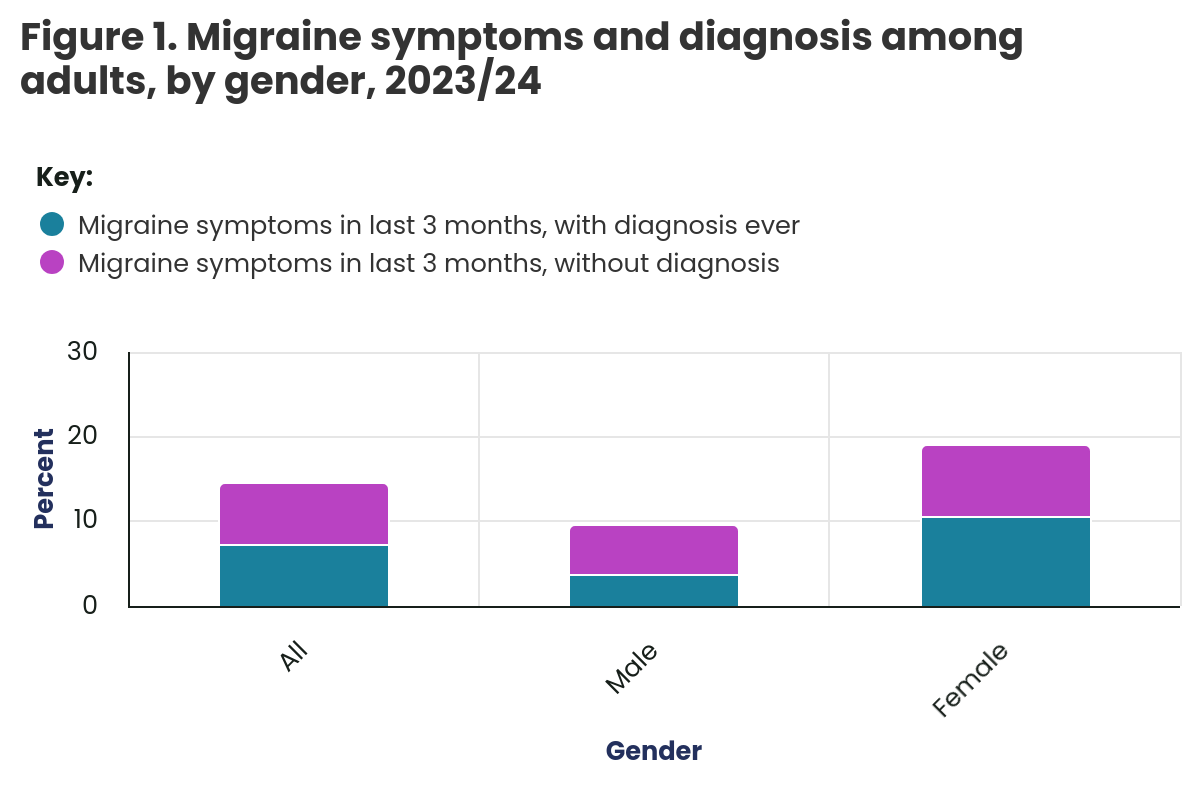
The Ministry of Health has just published results on migraine from the 2023/24 New Zealand Health Survey. Key findings include that 1 in 7 adults in NZ (15%) reported migraine symptoms in the last three months, based on a validated screening questionnaire, but half of these had never been diagnosed with migraine by a doctor. This equates to around 317,000 people with migraine symptoms but without a diagnosis.
This is in line with what is reported in other countries but is the first time we can show that NZ also follows this trend. From international studies, reasons for undiagnosed migraine include people not realising their symptoms are migraine, not going to or talking to the doctor about ‘headache’ because they feel it’s not a serious complaint, think they won’t be taken seriously, aren’t aware there are treatments beyond over the counter medication and there are barriers to health care (cost, availability, lack of trust).
Many of the underlying causes of undiagnosed migraine relate to stigma – individuals, the public and health professionals trivialising and dismissing migraine – and poor understanding and knowledge about migraine disease and how it can be managed.
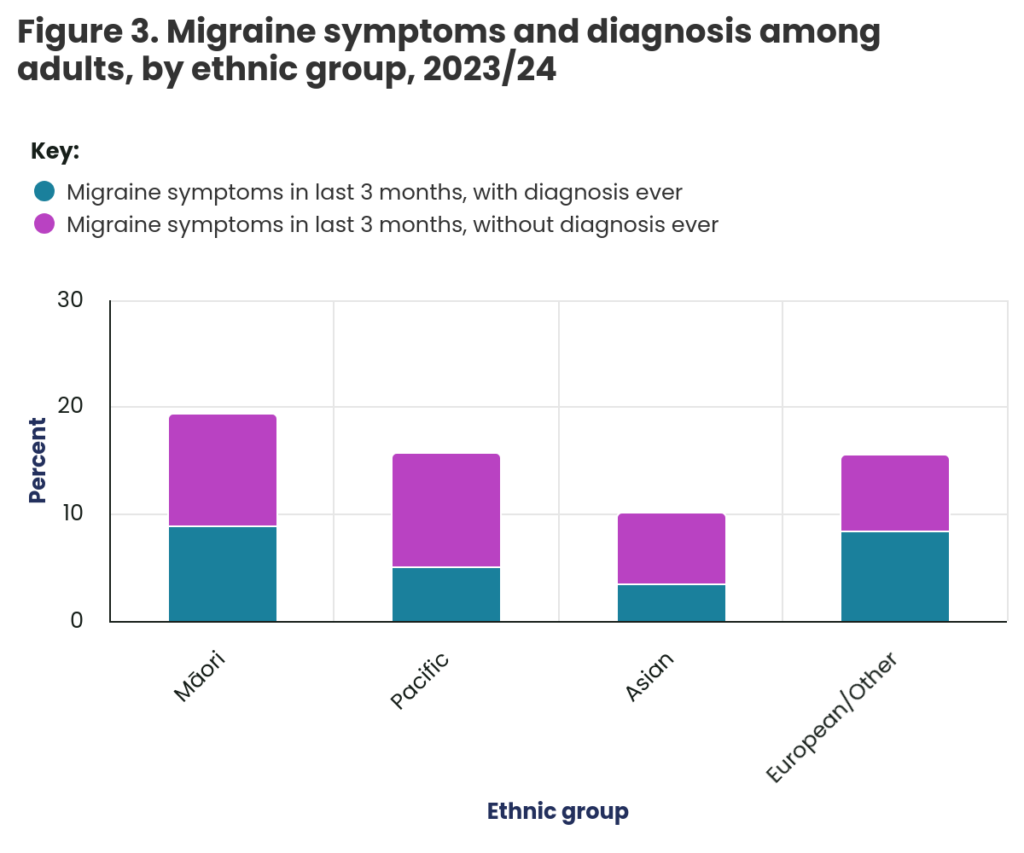
This NZ survey also shows that Māori have the highest rate of migraine symptoms (20%) and Māori and Pacific adults have the highest rates of migraine symptoms without a diagnosis (~11%). We need more research to understand the reasons for this – and this is one of the areas that the research project that has just been funded by the Neurological Foundation will be looking at.
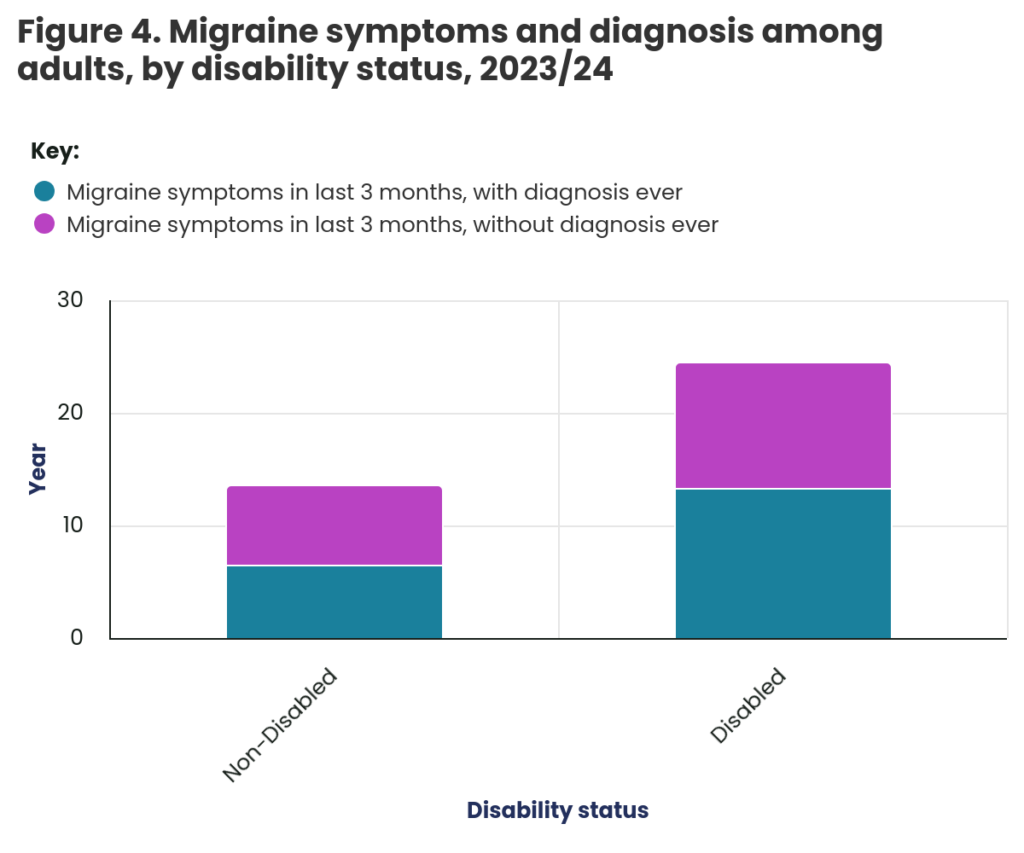
One result from this survey we haven’t seen before, because we’ve had no data on this, is the experience of migraine in people with disabilities. Nearly twice as many disabled adults (25%) had migraine symptoms compared to non-disabled adults. This is another area where we urgently need more research to understand why and to support disabled people to receive a migraine diagnosis and appropriate treatment.
These results would not have come about without Migraine Foundation Aotearoa NZ requesting to have questions about migraine included in the 2023/24 NZ Health Survey. We asked for the migraine screening questions to be included, so that we could see what the rate of undiagnosed migraine was, as this has never been studied in NZ before.
Now we have this information, we have an even stronger basis to advocate for better screening, recognition and treatment of migraine by health professionals and more awareness and education about migraine in the general public.
Many thanks to the team at the Ministry of Health for their support for this work and their analysis. Figures in this post come from their publication here (Migraine 2023/24: New Zealand Health Survey. 2026. Wellington: Ministry of Health).
Relevant reading
New migraine questions in the next New Zealand Health Survey