
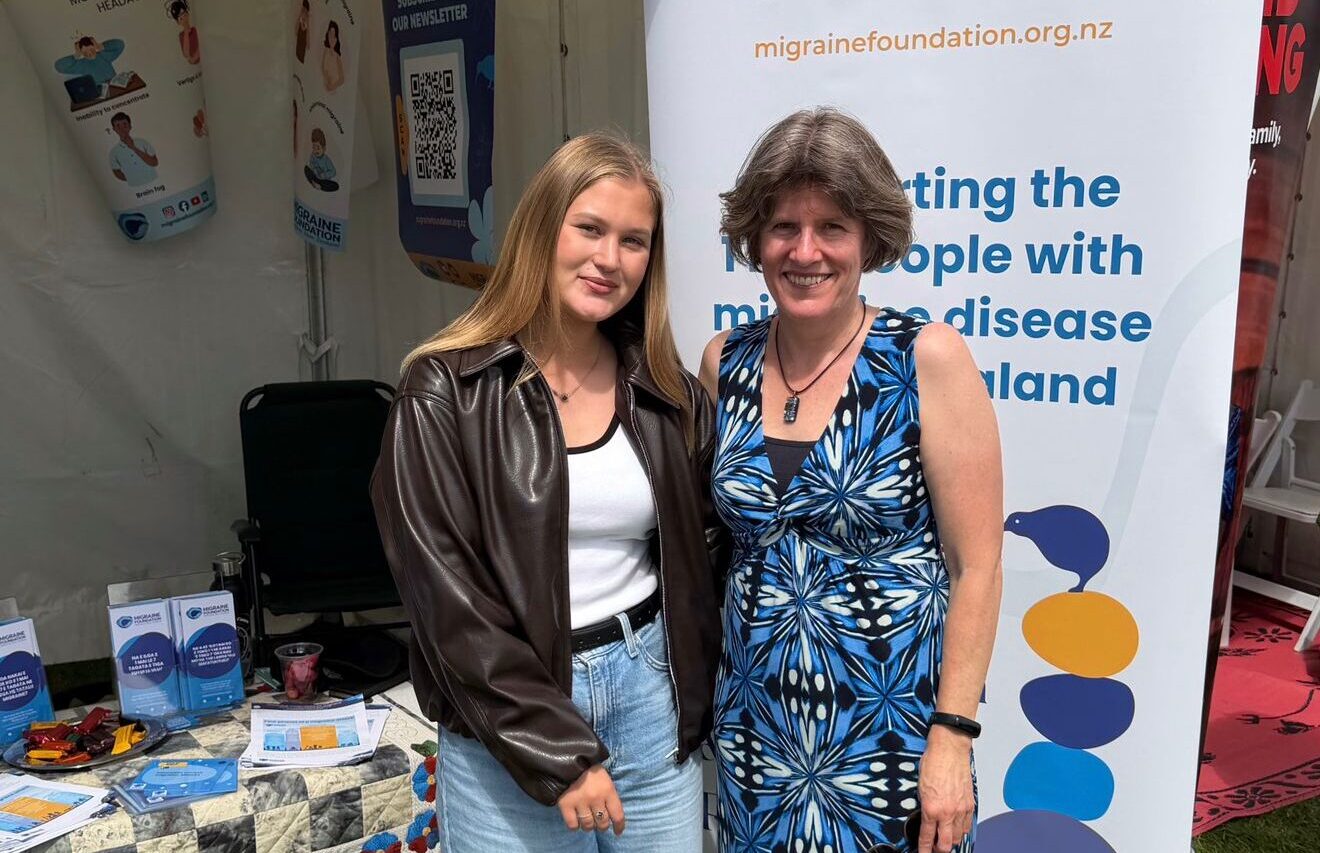
Pictured above: Sofiia Tsaregorodtseva (summer student) with Migraine Foundation co-founder Fiona Imlach
This guest blog from our summer student gives a glimpse into the behind the scenes work of a researcher – the meticulous and laborious review of previous published papers and the search for data in New Zealand that can answer some of the pressing questions we have about the impact of migraine.
Kia ora! My name is Sofiia Tsaregorodtseva, and I am a final-year Bachelor of Health Sciences
student at the University of Auckland. I am very grateful for the opportunity to volunteer and
help Fiona at Migraine Foundation Aotearoa New Zealand with two research projects on migraine in New Zealand during the summer 2025/2026.
The first project involved a review of available data sources to assess the prevalence of migraine and the direct costs (mostly from health care) and indirect costs (mostly from lost productivity at work) of migraine in Aotearoa. The second project involved a scoping review that explored and analysed the methods used in international cost-of-illness studies to determine the most appropriate approach for undertaking a cost-of-migraine study in Aotearoa.
Migraine affects the lives of many people in Aotearoa, often disrupting work, family life, and
everyday moments that matter. Despite this, there is still relatively little evidence on the direct
and indirect costs of migraine in New Zealand. As a student with a growing interest in research
and policy, being involved in these projects enabled me to understand and appreciate the
complexity of the research processes that occur behind the scenes before evidence inform
policy and support decision-making.
As part of the data review, I contributed to building the evidence base by developing search strategies for databases I was not familiar with, helping to ensure that we did not miss any relevant studies published on the topic in Aotearoa. This involved designing search terms across three key themes: migraine prevalence, costs, and productivity loss. Similarly, for the scoping review, my role was to extract data from the included studies to ensure that the key characteristics of each study were recorded consistently, thereby enhancing the overall rigour of our review.
I left this internship feeling inspired, knowing that our work is a meaningful step towards
closing the evidence gaps and improving the health of many people battling with migraine.
These projects strengthened my interest in how research can generate meaningful evidence to
inform policy and raise awareness of important but often overlooked health conditions.
Throughout the internship, Fiona created a supportive learning environment where I was
comfortable asking questions, sharing ideas, and growing my research skills. Ultimately, this
experience inspired me to pursue the research pathway for my postgraduate studies in Public
Health.
Many thanks to Sofiia for her dedication and commitment and even coming along to our stall at Pasifika festival to support our work! This project was funded by the Health Research Council and we hope to share our published results in the coming year.