
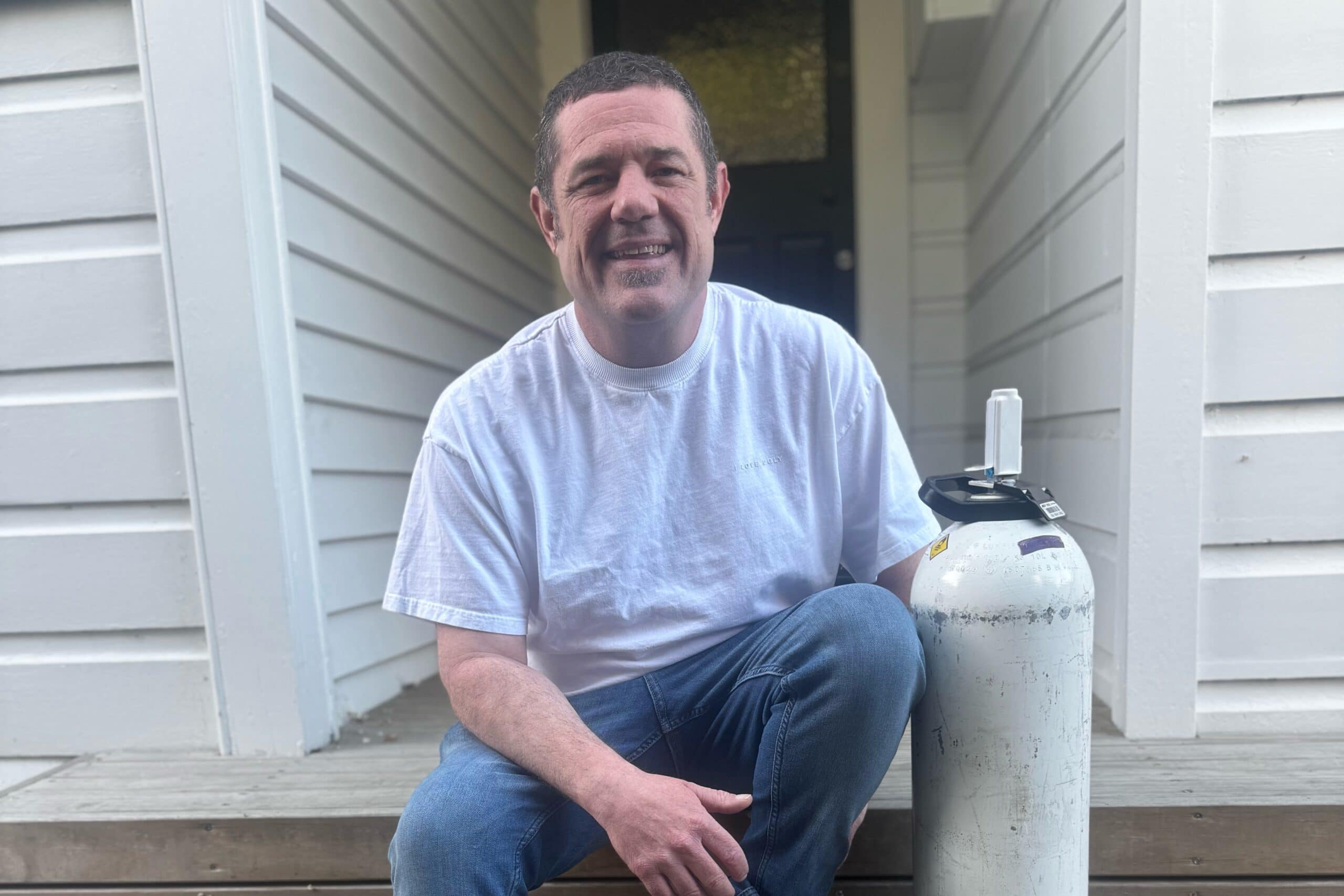
This guest blog is from Craig Stewart, Chair of Cluster Headache Aotearoa New Zealand. Craig shares his experience of cluster headache, what this has cost him and how he came to found this new charity to support people with cluster headache in Aotearoa and work to get better access to treatments, starting with high flow oxygen.
My first cluster headache was in November 2013. I did not know that was what it was called. I thought I was dying.
Leanne, my wife, drove me to hospital. I was rocking, my head in my hands, riding up the passenger seat and pleading with her to drive faster. Something drastic was happening. This was it.
I waited hours to be seen. By then the attack had passed. I was exhausted and wanted to go home. When it happened again the following night, I was beside myself.
My mum had recently died. My GP put it down to stress. There was no diagnosis and no referral offered. There were pain medicines.
I remember swigging whisky from the bottle at five in the morning most nights, desperate to sleep for a couple of hours so I could face the day, not knowing that alcohol is an attack trigger for many people with cluster headache, particularly during a bout. I was trying codeine, morphine, whatever I could get, without understanding what was happening to me. That is a hard thing to write, but it is the truth about how desperate I was.
Cluster headache attacks can last from 15 minutes to three hours untreated and can occur up to eight times a day. Bouts can continue for weeks or months. People with chronic cluster headache can have no sustained break from that pattern. [1]
Imagine the sharpness of brain freeze. It is an imperfect comparison, but think about that sudden pain, then imagine it refusing to pass and sitting with that peak intensity for 180 minutes. Now imagine being afraid it will happen again as soon as you fall asleep.
We were newly married. I felt like a burden. What kind of life could I offer my bride? How would I earn money? How could I find value in myself when I was afraid to leave the house, afraid to sleep, afraid of the next attack?
Leanne was my rock. She still is. I give thanks every day for her. But this affects her too. She has to see those attacks, helpless to take the pain away. She is such a caring woman. Being unable to help during the attacks is hard for her.
During an attack, I usually want to be alone. Yet knowing she is there helps. If I need an oxygen cylinder changed, or anything at all, she will do it. I would do anything for her too. In some ways this has made us stronger, but the toll reaches the whole family.
Finding a name, then finding relief
In November 2014 the attacks returned, almost to the day. My bouts followed a cruel calendar: early November through late February. I did my own research and eventually paid out of pocket to see a neurologist. At last, I had a diagnosis.
I found triptans, but the tablets I was offered were too slow for my attacks. I remember chewing them, trying to make them work faster. I was desperate and needed better guidance. Current guidance recommends fast-acting injectable or nasal triptans for attacks, rather than oral tablets. [2]
As I left that neurology appointment, the neurologist mentioned vitamin D3. I was sceptical about vitamins but I looked online and found a regimen developed by another patient. I printed it and took it to my GP. He warned me about harm and prescribed a monthly capsule. I still felt I was trying to work it out for myself.
In November 2015, I tried the patient-developed regimen. On day eight, I slept through the night.
I woke up and elbowed Leanne awake. “I slept the whole night.”
We cried. We hugged. I shed tears.
I knew one night was too soon to count my chickens. The next night could bring the beast back. But it did not. In November 2016, I repeated it, this time with a new GP and careful blood testing. Again, on day eight, the attacks stopped.
I was bemused, confused and determined to understand why. That curiosity led me to start my podcast, Inspired Conversations, and interview scientists, including vitamin D researcher Professor Michael Holick. [3]
I have largely been free of cluster attacks while maintaining D3 with medical supervision and blood tests for vitamin D, calcium and parathyroid hormone. I have also had further bouts. I cannot establish cause and effect from my own experience and I am not offering a dose for anyone else to copy. High-dose vitamin D can cause harm. What happened to me deserves investigation, not a promise that it will happen to someone else. [4]
Oxygen gave me confidence back
When oxygen worked, it felt miraculous. For me, high-flow oxygen can stop an attack in five minutes. Those minutes are still excruciating but knowing I have something that works changes everything.
I have wrestled with suicidal thoughts during attacks, hence the name suicide headache. Having oxygen changed the prospect of enduring hours of pain into something I could face: okay, I can get through this attack. I can reach the end of this cycle.
But I had to pay for it. I opened a supplier account and burned through a D2 cylinder in a few days. I found myself weighing up whether to use oxygen now or conserve it for a worse attack. Alongside the pain were questions about money, work and what I could offer my family and community.
In 2026, I paid again. Later, through an Official Information Act request, I obtained written confirmation that Health New Zealand funds intermittent high-flow oxygen for acute cluster headache through Community Oxygen Therapy Services. [5]
That led me to ask what patients could actually access across all 20 health districts. The replies revealed inconsistent referral routes, specialist gates and equipment. Auckland, for example, described supplying a 10 L/min concentrator. A concentrator does not deliver 100% oxygen and may not provide the flow and volume a person needs throughout an attack. The mask, reservoir, oxygen source and flow all matter. [2, 5]
For someone enduring this pain, a funded treatment on paper is not enough. They need a workable route to the right equipment, with clear instructions and support. I have collated the information about access to oxygen on the Cluster Headache New Zealand website, have confirmed a pathway for a discounted price through BOC gas for people with cluster headache who pay for their own oxygen and continue to work with Health New Zealand on ensuring oxygen is funded in all areas of New Zealand. Currently, a route for funded oxygen is confirmed for some districts but not others.
Why I keep doing this
In 2025, I travelled to the Clusterbusters conference and spoke about the D3 regimen. In 2026, I returned and led a workshop on devices, technology and AI as part of an effort bringing clinicians and researchers together to accelerate progress.
There is research to build on. In Australia, Dr Faraidoon Haghdoost is leading the funded PEACE pilot trial investigating psilocybin for cluster headache. It is research into a possible treatment, not an established answer. [6]
At the conference, one man described cluster headache as “supernatural”. When I asked what he meant, he told me about taking turns with his brothers to say goodbye to their dying father. When his turn came, an attack took away his chance to say what he wanted to say.
This disease takes more than hours. It takes moments you cannot get back.
That is why I started Cluster Headache New Zealand. At 44, my goal is that, before I draw my last breath, fellow New Zealanders can access oxygen with the information, education and equipment that give them the best chance of stopping an attack.
I know this is a long game. I am okay. I have Leanne beside me and I am grateful for the people who keep filling my tank for the work ahead: Fiona and Sarah at Migraine Foundation Aotearoa New Zealand, the neurologists giving their time to review our information, and fellow patients sharing their heartfelt experiences.
If you have cluster headache, find us at clusterheadache.org.nz. We meet online on the third Sunday of every month. You can check your district’s oxygen route, find information or simply get in touch. I will answer your email.
See us. Believe us. We need better treatment, better understanding and better support. If CHNZ can help, or simply hold space for you, we are here.
Māramatanga. Tautoko. Understanding. Support.
Craig Stewart.
Sources and useful links
CHNZ support meetings:
[1] International Headache Society, ICHD-3 cluster headache criteria:
[2] European Academy of Neurology treatment guideline (2023):
NICE recommendations, cluster headache section:
[3] Boston University, Professor Michael Holick:
[4] Medsafe, Vit.D3 New Zealand data sheet, including overdose risks:
[5] Health NZ OIA replies HNZ00205131 (27 July 2026), HNZ00206239 (25 August 2026) and HNZ00209054 (30 September 2026). District routes and CHNZ’s source references:
[6] The George Institute, PEACE trial funding announcement: